Despite doing countless abdominal crunches and eating a healthy diet, many people find it extremely difficult to reduce excess abdominal fat. Tummy tuck surgery is often the best option when diet and exercise alone are ineffective at achieving a svelte abdomen. By reducing excess belly fat and loose skin, tummy tucks create a more toned, sculpted appearance.
Tummy Tuck at a Glance
- Potential Benefits:
- A tummy tuck creates a flatter, more sculpted abdomen by removing excess skin and fat while tightening weakened abdominal muscles. This procedure can be especially effective for improving concerns that cannot be addressed with diet and exercise alone.
- Candidates:
- Ideal candidates are often individuals in good health who are bothered by loose abdominal skin, stretched muscles, or stubborn fat in the midsection. Patients should be at or near the average weight for their body type and have realistic expectations for their results.
- Procedure:
- Tummy tuck surgery is performed under general anesthesia in an accredited surgical facility. Depending on the extent of correction needed, techniques may range from a mini tummy tuck to a full abdominoplasty.
- Recovery:
- Patients can expect some soreness and limited mobility initially, with walking encouraged soon after surgery to promote healing. Most individuals resume light activities within a couple of weeks, while heavy lifting and strenuous exercise are typically restricted for about six weeks.
- Surgeon:
- Dr. Joseph A. Mele is a board-certified plastic surgeon with extensive experience performing tummy tuck procedures. He customizes each treatment plan based on the patient’s anatomy and goals, with a focus on achieving smooth, natural-looking abdominal contours.
What Is a Tummy Tuck?
Tummy tuck surgery (abdominoplasty) is designed to tighten the abdominal muscles and remove excess skin and fat, creating a smoothed and flattened abdominal wall. Abdominoplasty literally means “abdomen changing,” and the change can be dramatic. San Francisco plastic surgeon Joseph A. Mele, MD, FACS, has performed many successful tummy tuck procedures for both women and men. If you are frustrated with excess abdominal fat and folding skin, tummy tuck surgery is available at our Walnut Creek Plastic Surgery Clinic to help you achieve your goals.
What Is a Tummy Tuck?
Tummy tuck surgery (abdominoplasty) is designed to tighten the abdominal muscles and remove excess skin and fat, creating a smoothed and flattened abdominal wall. Abdominoplasty literally means “abdomen changing,” and the change can be dramatic. San Francisco plastic surgeon Joseph A. Mele, MD, FACS, has performed many successful tummy tuck procedures for both women and men. If you are frustrated with excess abdominal fat and folding skin, tummy tuck surgery is available at our Walnut Creek Plastic Surgery Clinic to help you achieve your goals.
Am I a Candidate for a Tummy Tuck?
Do you have loose abdominal skin, stubborn lower belly fat, or lax abdominal muscles? If so, you are probably a candidate for a tummy tuck. Nothing is better for tightening the abdominal muscles and removing loose lower abdominal skin. If the problems are isolated to below the belly-button, a mini tummy tuck may be sufficient to significantly improve the appearance of your belly. On the other hand, if disproportionate fat in the lower abdomen is your only concern, and your muscles and skin are tight, liposuction may be a simpler option for you.
Abdominoplasty significantly improves the appearance of the abdomen. However, fat behind the abdominal muscles is not accessible. In cases where the excess fat is stored primarily inside the abdomen, weight loss is usually necessary in order to achieve optimal results.
Planning for a Tummy Tuck
Abdominal wall laxity is most commonly seen after pregnancy and weight loss. Large weight gains and pregnancy stretch the abdominal wall muscles and skin. After pregnancy or weight loss, the size of the belly decreases, but the skin and muscle may not recoil.
Like many things in life, timing is important for a successful tummy tuck. It is recommended to wait one year after your last child before having a tummy tuck. This does not mean you have to wait a year to have a consultation, but you want to give your body time to heal and recover before surgery. This improves the predictability and safety of your result.
Normally, abdominoplasty is performed after you are finished having children. Additional pregnancies, or large weight gains, can reverse the abdominoplasty repairs. If you maintain a steady weight after surgery, you are much more likely to maintain your results.
The number one requirement for safe tummy tuck surgery is that you are healthy. If you have any medical conditions, they should be well controlled and discussed prior to surgery. If you smoke, stop. This includes tobacco, marijuana, and vapes. The risk of complications related to wound healing are six times higher for smokers. All plastic surgeons require that you stop smoking a minimum of four weeks before and after surgery, some longer, so be sure to check with your board-certified plastic surgeon.
There is no substitution for an in-person consultation when it comes to deciding if a procedure is right for you. The ability to pinch and feel the elasticity of the skin is just not possible with virtual consultations. While it may be possible to estimate the scope of the surgery virtually, the actual procedure can only be confirmed after an in-person physical exam.
Tummy Tuck vs. Liposuction
Choosing between a tummy tuck or liposuction may seem confusing at first. Simply stated, a tummy tuck tightens the abdominal muscles while removing excess skin and abdominal fat. Liposuction only removes fat. While both liposuction and abdominoplasty are surgical procedures, liposuction uses multiple small incisions to suction away fat from under the skin. Abdominoplasty, on the other hand, uses an incision low on the abdominal wall to excise both skin and fat. Removing the excess skin allows the remaining abdominal skin to be tightened and smoothed. An abdominoplasty also allows access to the abdominal wall muscles. When the abdominal wall muscles are loose, or separated (diastasis recti), the muscle sheath is tightened with sutures placed like an internal, supportive corset.
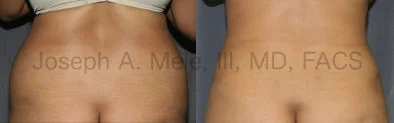
Many of our tummy tuck patients combine abdominoplasty with liposuction to obtain enhanced results. While a tummy tuck tightens the front of the trunk, liposuction is often added to remove disproportionate fat in the back and sides to improve overall body proportions.
For more information, visit our page dedicated to the differences between tummy tuck and liposuction.
What Are My Tummy Tuck Options?
Dr. Mele is experienced with an array of tummy tuck surgery techniques. Options include:
Mini Tummy Tuck (Mini-Abdominoplasty)
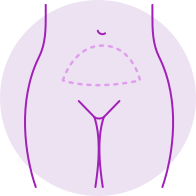
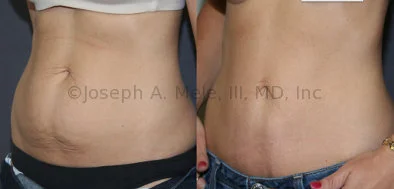
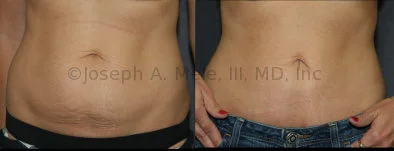
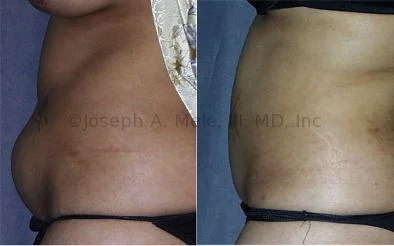
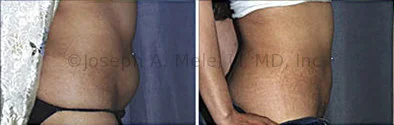
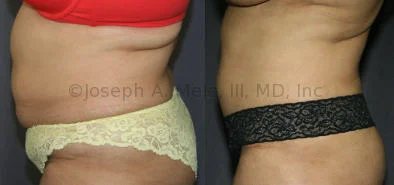
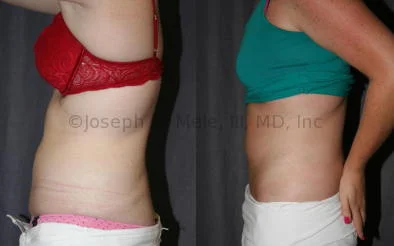
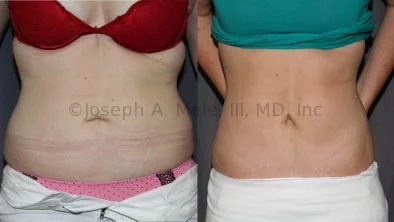
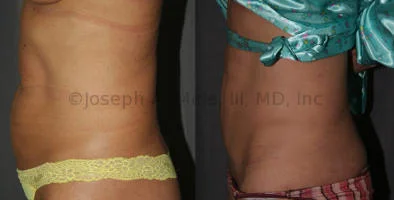
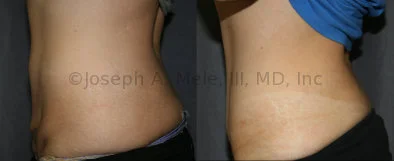
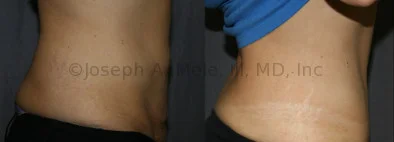
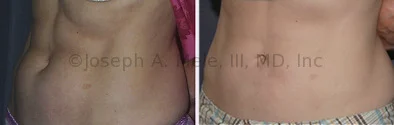
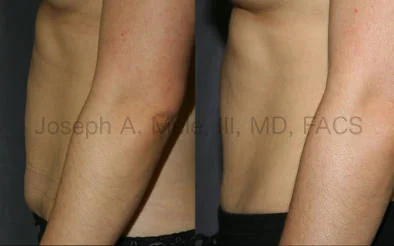
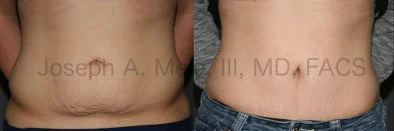
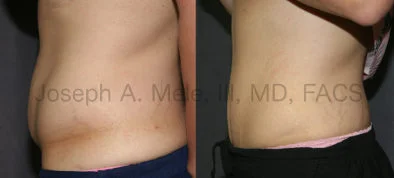
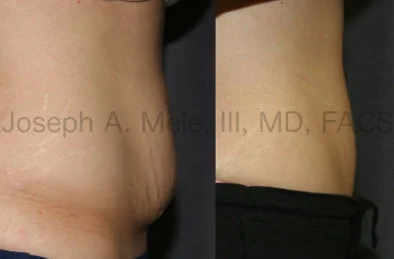
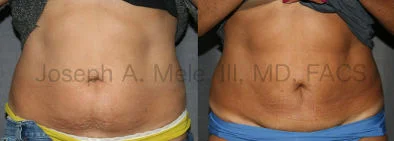
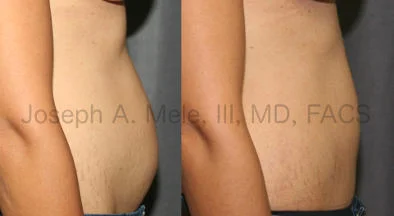
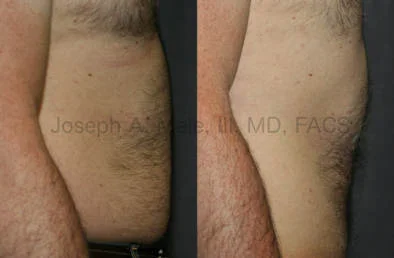
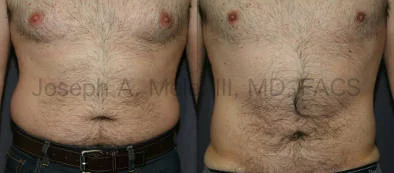
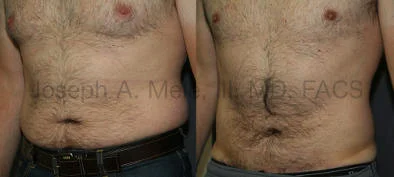
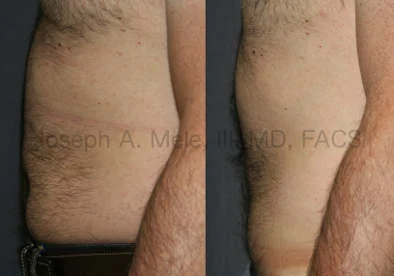
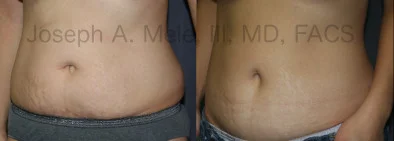
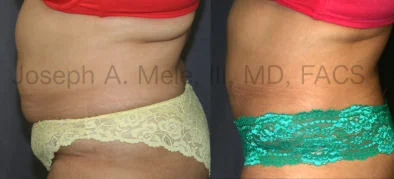
When the laxity of the abdominal skin and muscle is isolated to the area below the belly-button (umbilicus), a mini tummy tuck may be the best option for patients wishing to improve the appearance of their bellies. A mini tummy tuck is often combined with liposuction of the upper abdomen and sides to further reduce unwanted abdominal wall fat and enhance your final result.
A low abdominal incision is used to tighten the skin and muscles of the lower abdomen. The incision for a mini abdominoplasty is normally shorter than the incision for a “full” tummy tuck. This is because mini tummy tucks are usually performed when there is less redundant skin on the abdominal wall. Less skin to remove means a shorter incision is required.
For more information, visit our page on mini tummy tuck.
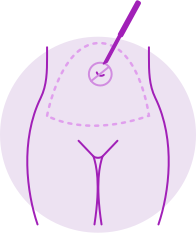
“Floating” Belly Button Tummy Tuck
When the abdominal skin and muscle laxity is isolated to the area below the belly-button, but there is also a small amount of loose skin just above the belly-button, a “floating” belly-button technique is used. This is not the usual way to do a tummy tuck. Patients who are good candidates for the “floating” belly-button tummy tuck need to be carefully selected by a board-certified plastic surgeon experienced with the “floating” belly-button abdominoplasty technique. If you are a candidate, however, it usually means an enhanced result with the same incision as a mini tummy tuck, and no scar around the belly-button.
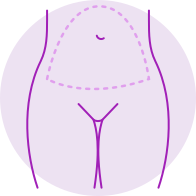
Full Tummy Tuck
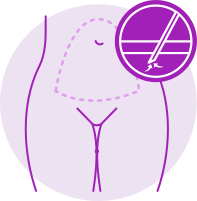
Equally satisfying for patient and surgeon, the tummy tuck (abdominoplasty) is the workhorse of abdominal rejuvenation and the gold standard to which every other abdominal tightening procedure is compared. Abdominoplasty requires an incision low on the abdomen, and one around the umbilicus. The procedure not only tightens the abdominal skin, but also removes excess fat and tightens the muscles of the abdominal wall. By tightening the abdominal muscle wall, a tighter foundation is created on which to build your new tummy.
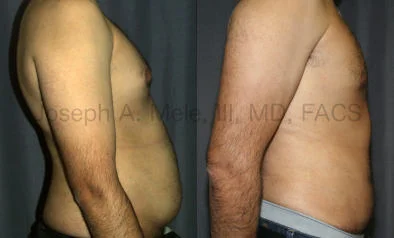
If the abdominal fat is primarily inside the abdomen, behind the abdominal muscles, it may not be possible to sufficiently tighten the abdominal muscles to achieve a flat belly. It is similar to attempting to close an overstuffed suitcase; a rounded appearance will remain. This situation is more common in men, but is also seen in women. For this reason, tummy tucks work better if you are near your ideal body weight. Fat outside the abdominal cavity, between the skin and the abdominal muscles, can easily be removed. This is often done as part of a tummy tuck, and further flattens the belly.
Fleur-De-Lis Tummy Tuck
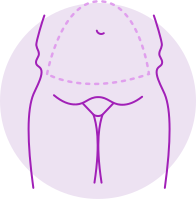
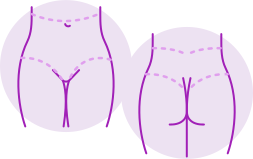
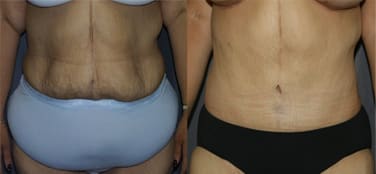 The Fleur-De-Lis Tummy Tuck is the option of choice when the skin laxity of the abdominal wall is massive. This is most often seen after bariatric surgery, but may also be the result of weight loss of greater than 75 pounds. The Fleur-De-Lis Abdominoplasty incorporates all the features of a full tummy tuck, and has an additional incision running down the middle of the abdomen. The vertical midline incision allows large excesses of upper abdominal skin to be directly removed from the central abdomen. The Fleur-De-Lis Abdominoplasty is the biggest abdominoplasty available, and is designed to remove the most extreme amounts of excess abdominal skin.
How Are Tummy Tucks Performed?
Your tummy tuck procedure will be discussed in detail with Dr. Mele during your consultation. There are several options available (described in the above section) depending on the amount of skin excess, the tightness of the abdominal wall muscles, and the amount of fat on the abdomen. Dr. Mele will listen to you and review your surgical goals and expectations. He will select and explain the best treatments for you, any alternatives that may be appropriate, and the expected recovery period. A preoperative medical history and physical examination are part of the preparation, and will guide us to the safest and most predictable results. Depending on your health, additional preoperative tests may be recommended.
All procedures are performed in an accredited surgical facility under general anesthesia administered by an anesthesiologist. Their job is to keep you safe and comfortable during your procedure. Dr. Mele prefers to keep our tummy tuck patients overnight. This gives us a chance to evaluate how you are doing and provide additional postoperative education, so when you go home the next morning you will feel more confident and comfortable with your recovery.
What Is Recovery from Tummy Tuck Surgery Like?
Tightening the abdominal muscles makes them sore; however, the sooner you get moving, the sooner you will feel better. Oral analgesics (pain pills) can significantly decrease postoperative pain and assist with movement. Support from family and friends is recommended the first few days after your tummy tuck procedure. You may need gentle assistance getting up from laying down or sitting, but this improves with each day of your recovery.
Walking is encouraged beginning right after surgery. Most patients feel better when they are up and moving. To help get you moving right after surgery, Dr. Mele injects the area with a long-acting local anesthetic. By delivering the pain medicine directly to the area that needs it, more effective pain relief is provided with fewer side effects. Additionally, movement helps work out the soreness, maintain strength, and recover more quickly. Early ambulation decreases the risk of complications. Standing helps the lungs fully expand, and helps with digestion, too.
Hydration is also important and should be maintained. Proper hydration makes us feel better, speeds healing, and also prevents postoperative complications. Surgery increases the need for fluids, so it is important to drink plenty of liquids during recovery.
Heavy lifting (generally more than 20 pounds) needs to be avoided for six weeks. This allows the tightened muscle fascia to fully heal, and keeps everything tight.
How Much Does a Tummy Tuck Cost?
Not all tummy tucks are the same. Tummy tucks after massive weight loss usually require excision of significantly more skin than those after childbirth. The more skin present and the farther around the body the redundancy extends, the longer the surgery and the greater the cost.
Tummy tucks are not usually covered by insurance. Panniculectomies for recurrent infections in the skin fold may be. Panniculectomies are different from tummy tucks in that the roll of skin at the bottom of the belly is reduced; however, the abdominal muscles are not tightened as part of that procedure.
The cost of a tummy tuck ranges from $13,500 to $25,000 depending on the scope of the procedure. Variables which affect the cost of abdominoplasty include:
- The surgeon’s professional fee
- Operating room costs and overnight stay
- Anesthesia fees
- The duration of the surgery
- Surgical garments
- Additional prescriptions (antibiotics, pain medications)
- Lab costs
- Scar treatment
For your convenience, payment options are available. Dr. Mele’s Walnut Creek Plastic Surgery office accepts most major credit cards and third-party financing is also available. For payment options, please visit our plastic surgery financing page.
Complementary Procedures
While tummy tuck surgery on its own is often enough to achieve one’s individual goals, there are numerous procedures that can serve as complements to abdominoplasty for more comprehensive rejuvenation. By the same token, tummy tuck surgery can itself serve as a complement to other procedures you may be considering, as well. Options include:
Liposuction
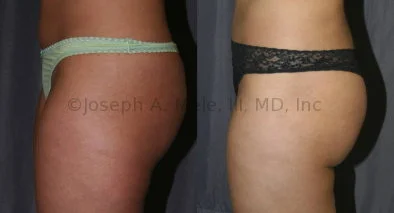
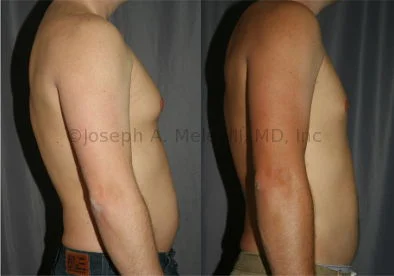
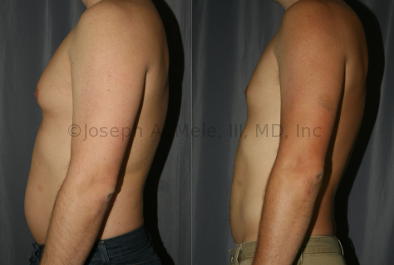
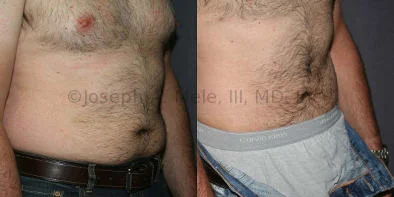
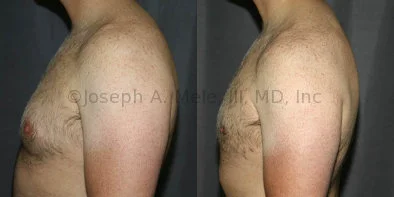
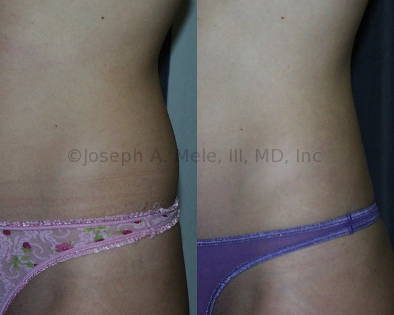
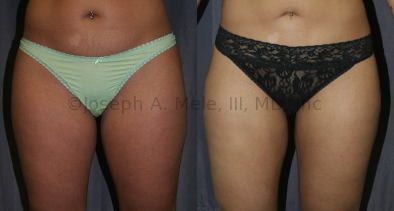
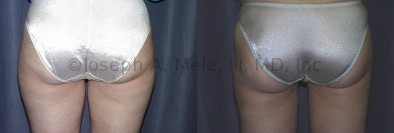
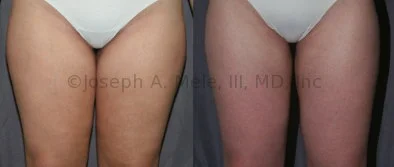
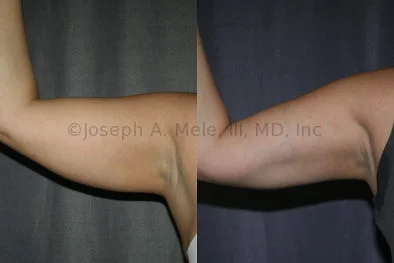
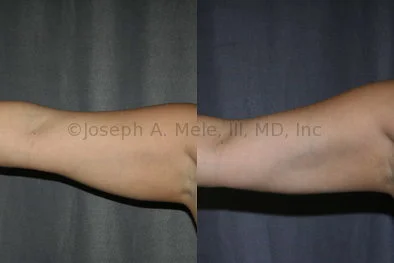
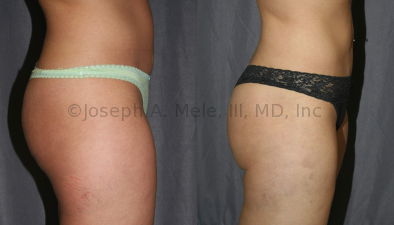
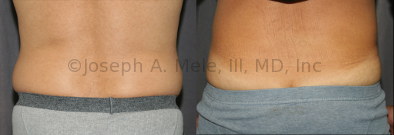
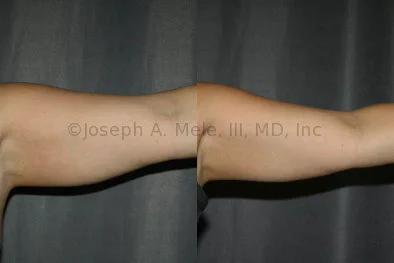
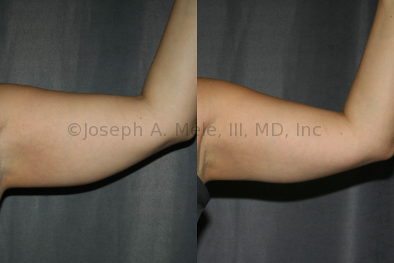
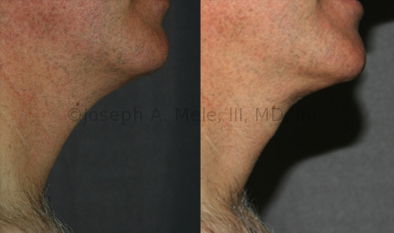
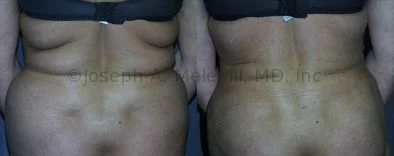
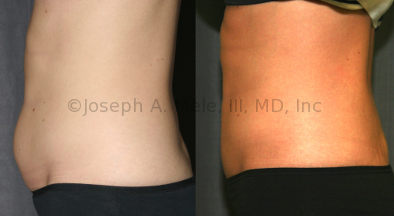
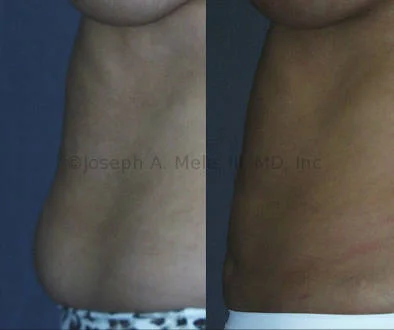
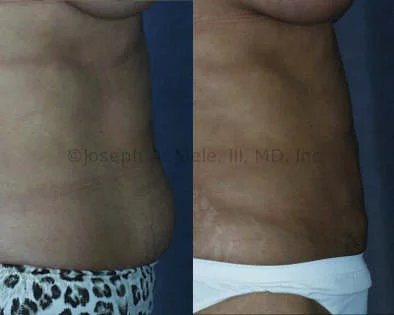
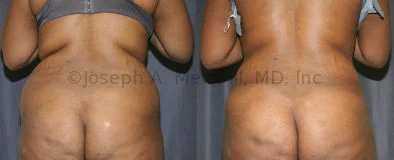
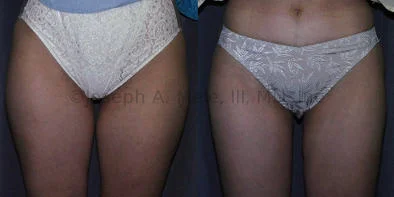
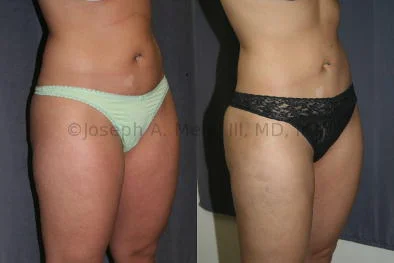
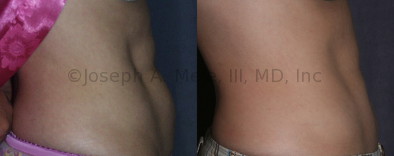
Cosmetic plastic surgery cannot substitute for a proper diet and exercise. However, there are some problems that diet and exercise alone cannot fix. Excess energy consumed is stored as fat. Where the fat is stored depends on your individual genetic programming. For some, it is the abdomen, and for others, the thighs. When the fat is stored disproportionately, it forms a bulge. It may not be possible to spot-remove these fat bulges with diet and exercise alone. Often, other parts of the body appear gaunt and unhealthy before this stubborn fat is eliminated by weight loss. Liposuction, on the other hand, can directly remove stubborn fat deposits, providing you with a more proportionate shape and sexier curves.
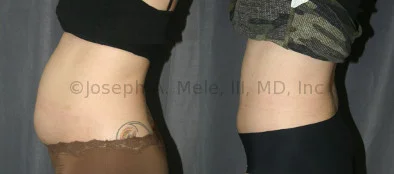
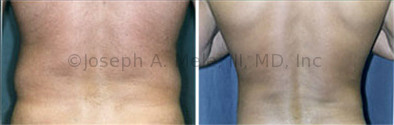
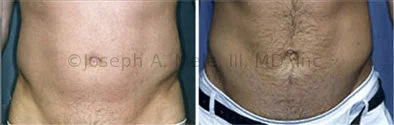
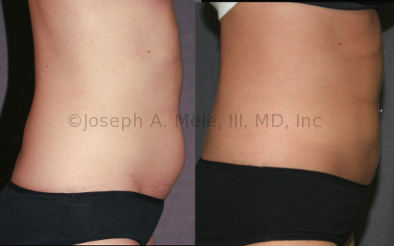
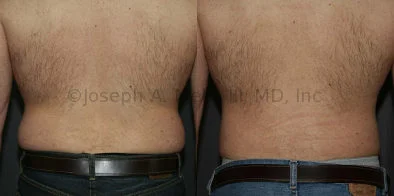
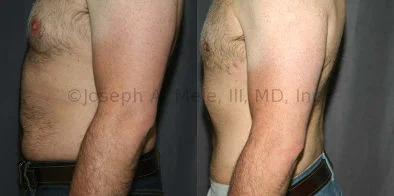
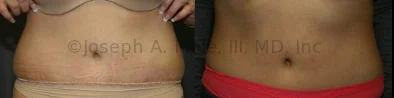
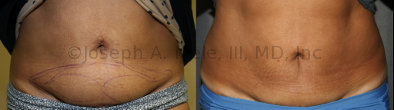
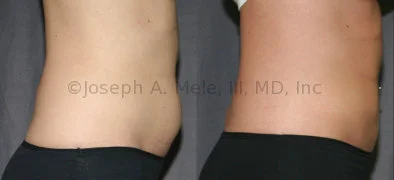
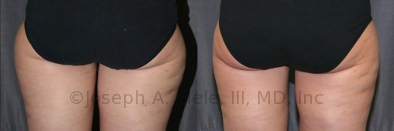
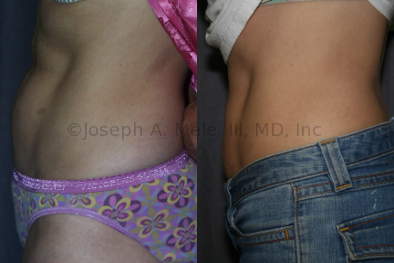
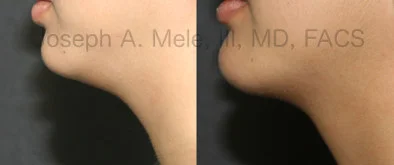
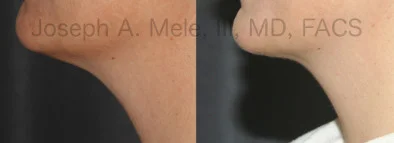
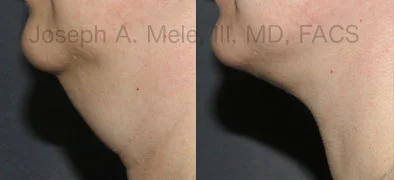
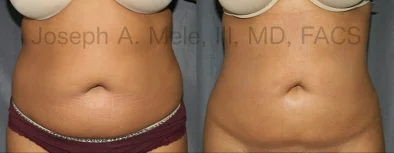
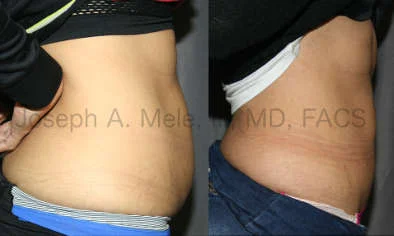
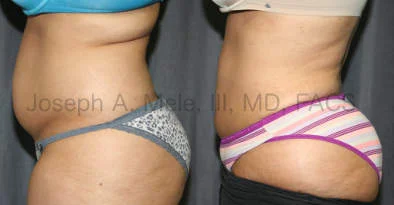
If the abdominal skin is tight, localized disproportionate accumulations of fat can be efficiently removed with tumescent liposuction. If you have a belly bulge caused by fat, accompanied by both good muscle tone and good skin tone, tumescent liposuction provides a simpler, and faster, alternative to a tummy tuck. Unfortunately, liposuction (SAL) cannot tighten loose skin. Even laser liposuction (LAL) and ultrasonic liposuction (UAL) cannot significantly tighten skin that has lost its tone. Liposuction may instead make loose skin look worse. Removing fat under loose skin removes the skin’s support. This loss of support causes the skin to fold over.
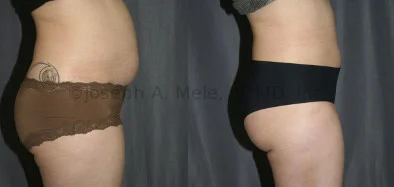
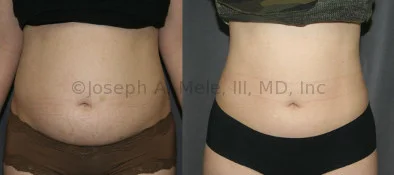
On the abdomen, problems with loose skin are most prominent in the lower abdomen and in the area above the belly-button. Unlike liposuction, the tummy tuck is specifically designed to address the problem of loose redundant skin.
Mommy Makeover
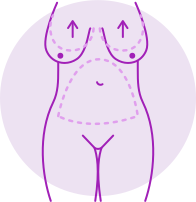
The term Mommy Makeover refers to a combination of procedures used to rejuvenate the areas most commonly stretched out and deflated after pregnancy – the belly and the breasts. Originally applied to the combination of breast augmentation and tummy tuck, the term Mommy Makeover has become a generic term for any combination of procedures that rejuvenates both the abdomen and the chest.
Abdominal rejuvenation may include any of the procedures mentioned on this page: liposuction, mini tummy tuck, full tummy tuck (abdominoplasty) or lower body lift (belt lipectomy). Breast enhancement procedures include breast augmentation, breast lift, mastopexy augmentation or, in some cases, breast reduction.
More information about Mommy Makeovers is available on Dr. Mele’s Mommy Makeover page.
Lower Body Lift
The lower body lift is a tummy tuck that extends all the way around the body. It is almost exclusively performed for post-bariatric surgery patients and for people who have lost large amounts of weight. Extreme weight gain leads to overstretched skin. When this is followed by a large weight loss, the skin remains stretched out and cannot return to its original shape. A skirt of loose skin extending all the way around the trunk may be the result. In these cases, additional weight loss and muscle building will not shrink the skin. The excess skin needs to be removed with a lower body lift.
The lower body lift is also called a Belt Lipectomy because a belt of excess skin and fat is removed. During the procedure, the abdominal muscles can also be tightened. This enhances the abdominal contours, like in a traditional tummy tuck. You can find more information about this and other options on our post-bariatric plastic surgery page.
Tummy Tuck Frequently Asked Questions
Am I a good candidate for a tummy tuck?
Good candidates are in good overall health, at a stable weight close to their goal, and bothered by loose abdominal skin, stubborn fat, or separated abdominal muscles (diastasis recti) that have not responded to diet and exercise. Non-smokers are preferred, and anyone who currently smokes must be willing to stop for a minimum of four weeks before and after surgery. Because abdominoplasty is not a weight loss procedure, the best outcomes are achieved by patients who are near their ideal body weight before surgery.What does the procedure actually involve?
A tummy tuck removes excess skin and fat from the abdomen, tightens weakened or separated abdominal muscles, and repositions the belly button to maintain a natural appearance. The incision is placed low on the abdomen, typically along the bikini line, so it can be hidden by underwear or a swimsuit.What is the difference between a full and a mini tummy tuck?
A full abdominoplasty addresses both the upper and lower abdomen, repairs the abdominal muscles from top to bottom, and removes a larger amount of excess skin. A mini tummy tuck is limited to the area below the belly button, often involves a shorter incision, and is best suited for patients with good upper abdominal tone and more modest concerns in the lower abdomen.Will I have visible scars?
Scarring is a normal part of any surgical procedure. The primary scar is horizontal and positioned along the bikini line, where it can typically be concealed by underwear or a bathing suit. A small additional scar may be present around the belly button. With proper scar care, most scars fade considerably over 12 to 18 months, though they do not disappear entirely.How long is recovery?
Most patients take two to four weeks away from work, with a longer recovery expected for those in physically demanding jobs. Walking is encouraged from the first day after surgery to support healing and reduce the risk of complications. Heavy lifting and strenuous exercise are restricted for approximately six to eight weeks. Swelling can persist for several months, and final results are often fully visible at the six to twelve month mark.How much discomfort should I expect?
The first week tends to involve the most discomfort, primarily from the muscle tightening and incision healing. Most patients describe the sensation as tightness rather than sharp pain, which is managed effectively with oral pain medication. Discomfort decreases steadily, and most patients feel significantly more comfortable after the first seven to ten days.Does insurance cover a tummy tuck?
In most cases, tummy tuck surgery is considered a cosmetic procedure and is not covered by insurance. Exceptions may apply when excess skin causes documented medical problems, such as recurring skin infections or significant mobility limitations following major weight loss. Most patients should plan for out-of-pocket costs, and financing options are available through our office.How long do results last?
Tummy tuck results are long-lasting for patients who maintain a stable weight and healthy lifestyle after surgery. The muscle repair and improved contour can hold up for many years. It is generally recommended to avoid significant weight fluctuations or future pregnancies before proceeding with abdominoplasty.What are the main risks?
As with any surgical procedure, tummy tuck carries risks including bleeding, infection, seroma (fluid accumulation), delayed wound healing, temporary numbness, and blood clots. These risks are minimized through careful surgical technique, proper patient selection, and following all pre- and post-operative instructions.Can I combine a tummy tuck with other procedures?
Yes. Abdominoplasty is frequently combined with liposuction of the flanks and back to improve overall body proportions. It is also a central component of the Mommy Makeover, which may include breast augmentation, breast lift, or other body contouring procedures. Combining procedures can enhance the overall result but may extend the recovery period.
Schedule a Tummy Tuck Consultation Today
If you are in good health, but frustrated with loose abdominal skin, stretched-out abdominal muscles, or excess abdominal fat, a tummy tuck might be right for you. To discuss your options, call (925) 943-6353 and schedule an appointment with our board-certified plastic surgeon, Dr. Mele. We are here to help. You can also fill out our online contact form, and a staff member will reach out to you.