Breast Augmentation at a Glance
- Potential Benefits:
- Breast augmentation can enhance the size, shape, and overall appearance of the breasts using implants tailored to the patient’s goals. This procedure can improve proportions, restore volume lost after pregnancy or weight loss, and help many patients feel more confident in their appearance.
- Candidates:
- Ideal candidates are typically individuals who would like to enhance the size or shape of their breasts, are in good general health, and have realistic expectations for treatment outcomes.
- Procedure:
- Breast augmentation is usually performed under general anesthesia in an accredited surgical facility. The procedure involves placing saline or silicone implants through a carefully positioned incision—most commonly in the breast crease or around the areola—to create natural-looking, proportionate results.
- Recovery:
- Most patients experience mild to moderate soreness and swelling in the first several days after surgery, with gradual improvement over time. Light activities are usually resumed within about a week, and most normal routines can be resumed as healing progresses in the following weeks.
- Surgeon:
- Dr. Joseph A. Mele is certified by the American Board of Plastic Surgery and breast augmentation procedures have been a special focus of his practice for many years. He offers an array of advanced breast implants and takes a personalized approach to implant selection, surgical technique, and treatment planning to help patients achieve natural-looking, balanced results.
Breast Augmentation and Breast Implants
Breast Augmentation with Breast Implants is a cosmetic plastic surgery procedure used to increase the size and improve the shape of a woman’s breasts.
The breasts are often seen as a symbol of a woman’s femininity. Sometimes women with small, underdeveloped breasts may lack confidence in their bodies. For this reason, Breast Augmentation Surgery (Augmentation Mammaplasty) continues to gain popularity. If you want larger and shapelier breasts, San Francisco plastic surgeon, Dr. Mele, can help you achieve your cosmetic goals in a comfortable environment where you will be well cared for. He and his staff will attentively listen to your desires, schedule convenient appointments, and fully address your cosmetic surgery concerns.
If you want larger, fuller breasts, you should consider Bay Area Breast Implants surgeon Joseph A. Mele, MD, FACS. A reputable San Francisco Bay Area Breast Implants specialist, Dr. Mele can help you achieve results that are personalized, and natural-looking. You can anticipate excellent care and a comfortable experience while visiting his Bay Area Plastic Surgery practice. Bay Area Breast Implants professional Dr. Mele can help to determine if you are a good candidate for Breast Augmentation (‘Augmentation Mammaplasty’).
At our Walnut Creek office we use several different Breast Enlargement techniques. After an in-depth consultation, Dr. Joseph Mele will recommend the technique that is most appropriate for you.
Breast Augmentation (Mammoplasty) Before and After Photos
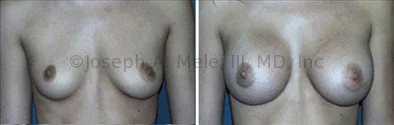
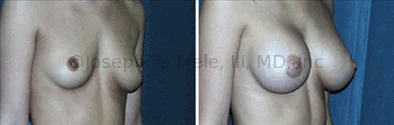
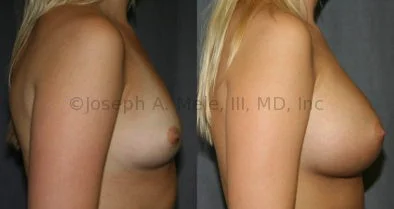
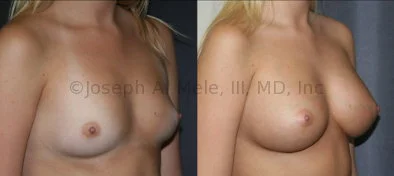
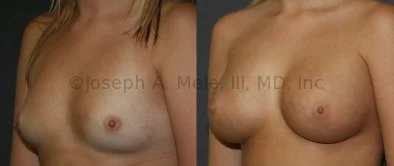
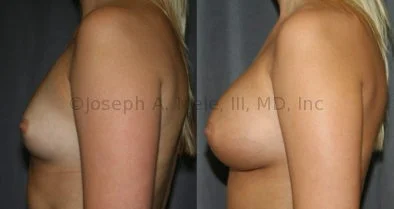
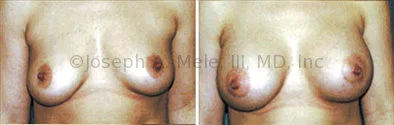
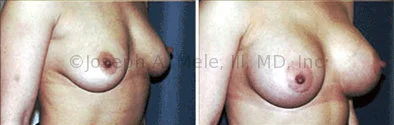
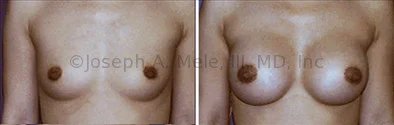
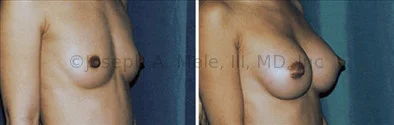
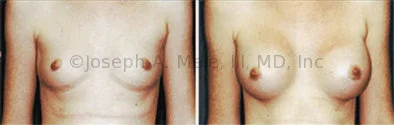
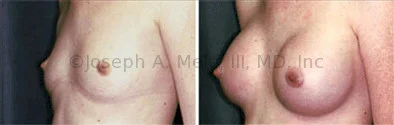
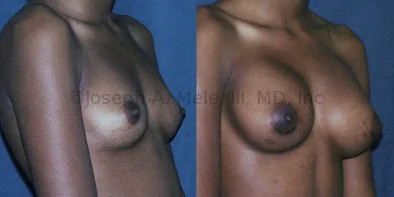
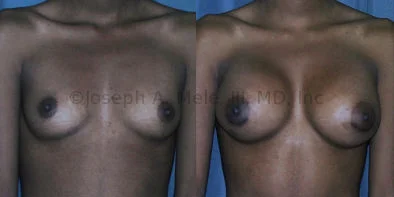
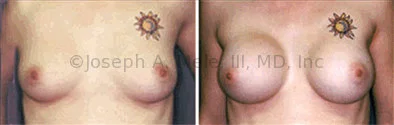
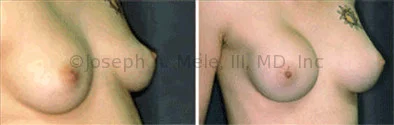
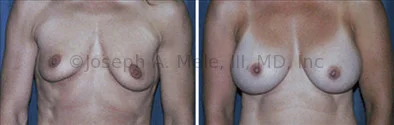
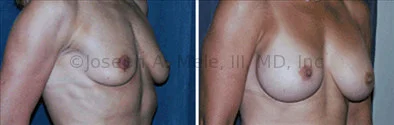
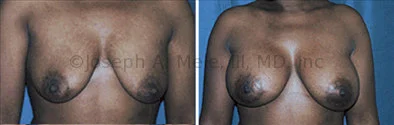
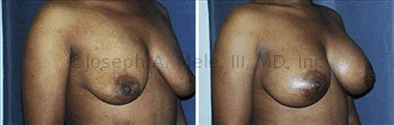
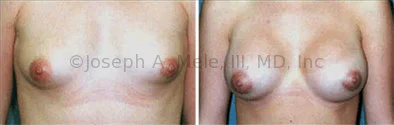
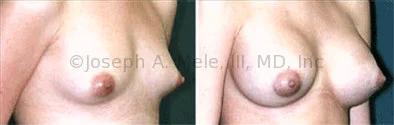
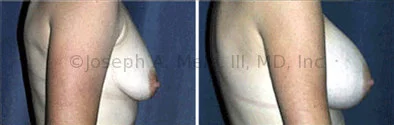
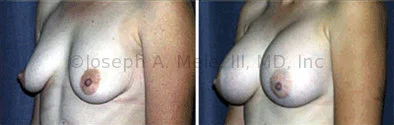
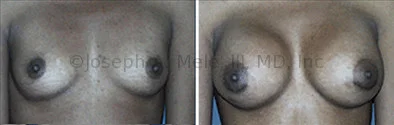
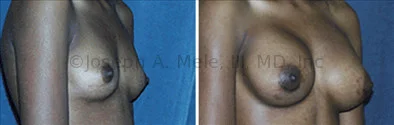
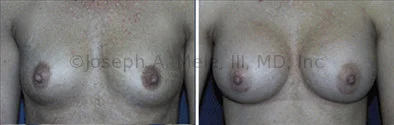
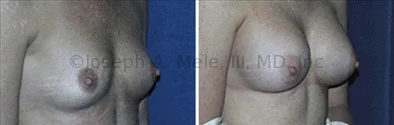
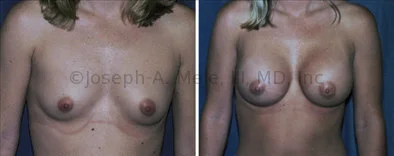
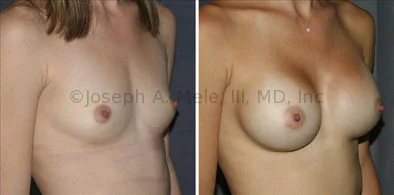
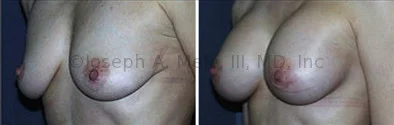
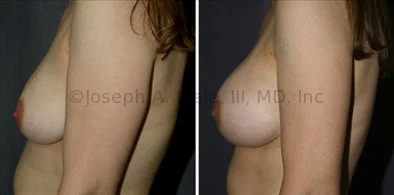
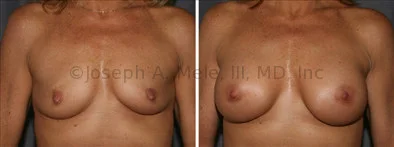
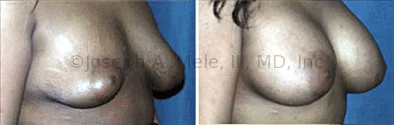
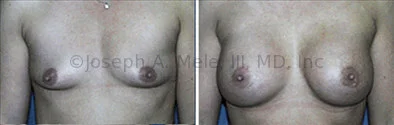
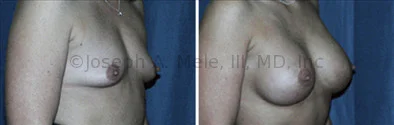
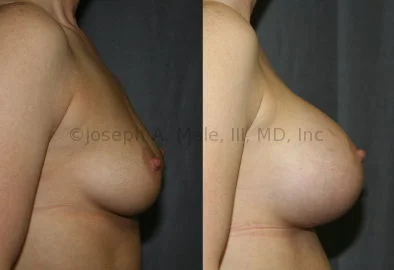
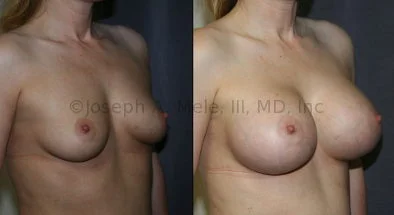
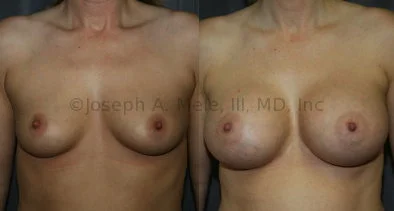
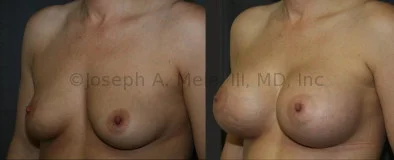
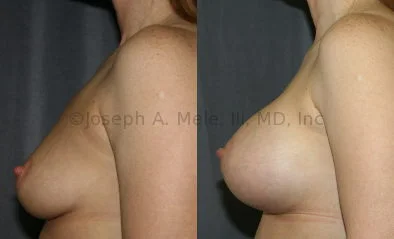
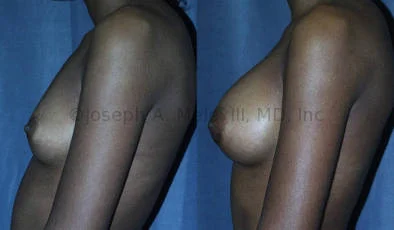
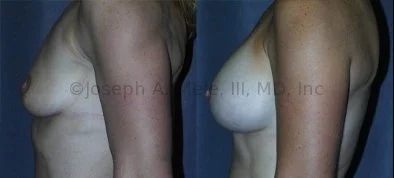
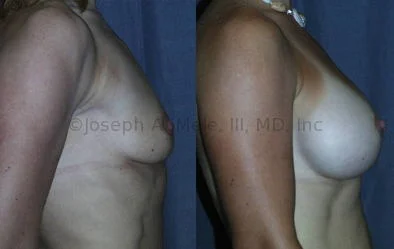
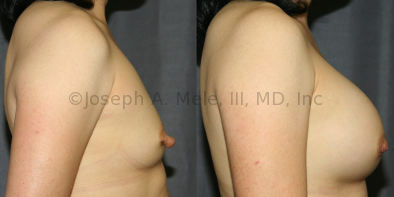
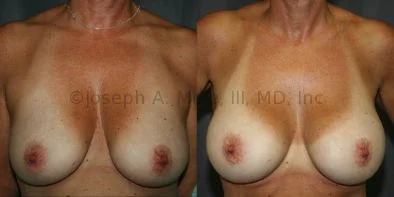
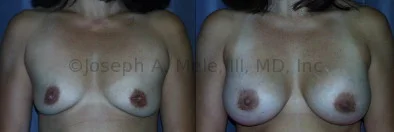
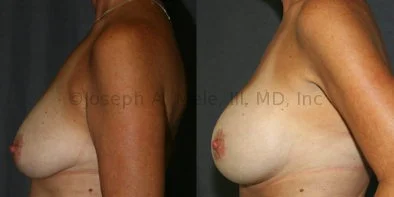
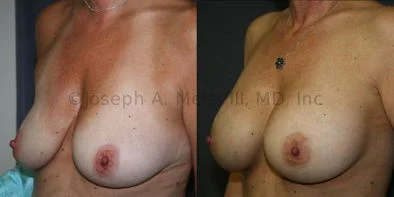
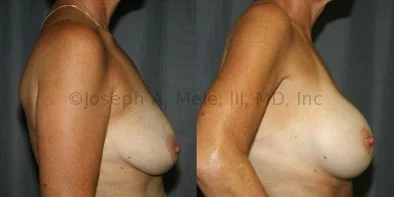
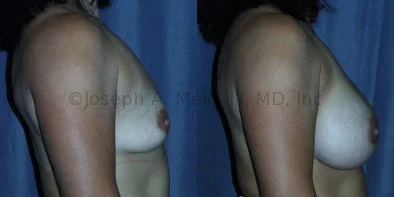
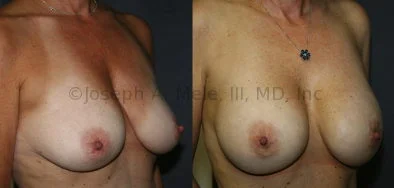
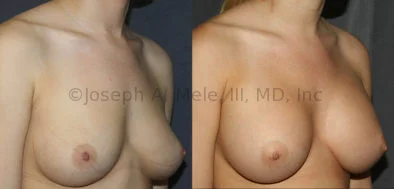
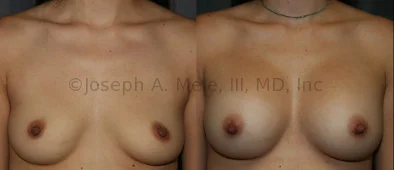
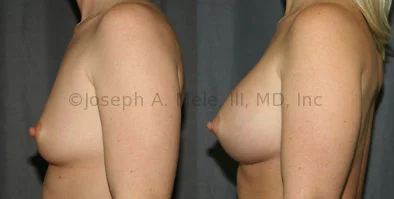
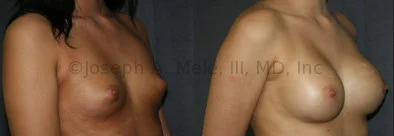
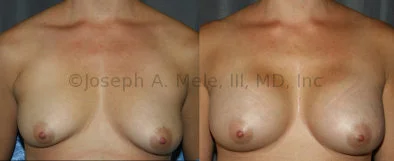
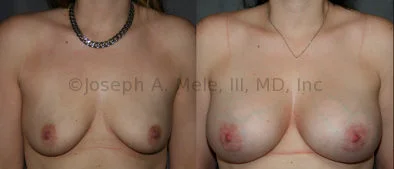
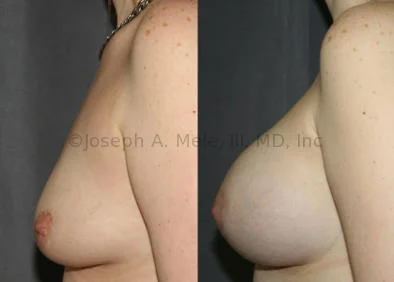
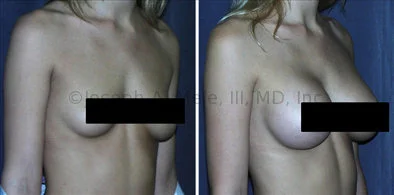
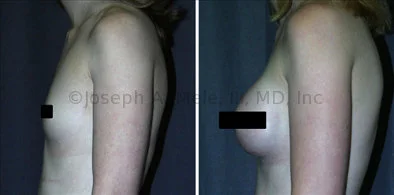
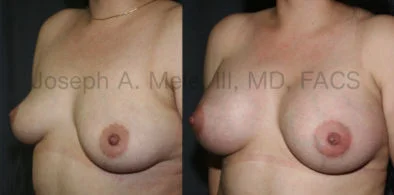
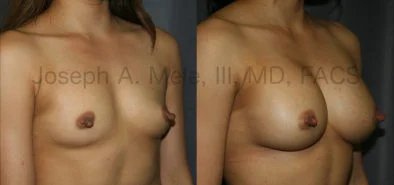
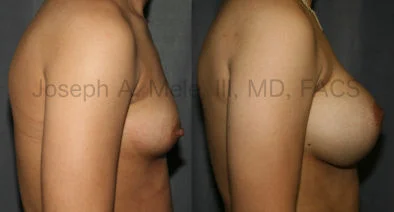
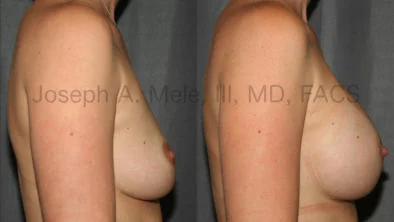
Breast Augmentation Procedure
When performing Breast Augmentation, Dr. Mele first makes a small incision either in the crease of the breast or along the edge of the areola. He then gently inserts saline or silicone gel Breast Implants beneath the pectoral muscles, which help hold the breast implants in place. Finally, the incision is carefully closed and stitched. Breast Enhancement is usually performed under general anesthesia in an accredited surgery center for your comfort and safety.
Many patients who come to our Walnut Creek Plastic Surgery Office choose to undergo Breast Augmentation in conjunction with other cosmetic surgery treatments such as Tummy Tuck (the other half of a Mommy Makeover), Blepharoplasty, Liposuction or Rhinoplasty. If you are interested in Breast Implants and live in the San Francisco Bay Area, give us a call at (925) 943-6353 or schedule an appointment with Dr. Mele at our Walnut Creek plastic surgery office today.
Breast Augmentation Videos
Postoperative Care
Generic postoperative instructions are included here as an example; however, your postoperative instructions may vary depending in your unique situation.
Check out Dr. Mele’s postoperative instructions for breast augmentation.
Breast Augmentation Video Presentation
Mommy Makeover Video Presentation
Am I a Good Candidate for Breast Augmentation?
You may be a good candidate for breast implants at our San Francisco area office if you:
- Are unhappy with the size, shape or appearance of your breasts.
- Are over the age of 18.
- Have realistic surgical expectations.
- Are in good health.
An in-person, private consultation is the best way to get Breast Augmentation information specific to your needs. Your questions are answered in an interactive way, and specific details are reviewed. A good way to get all your questions answered is to write them down as your think of them, and bring your list with you to your appointment. A focussed medical history and physical examination will help determine the safest and most predictable method to achieve the goals you want.
Contact our Walnut Creek office to learn more about Breast Augmentation. We are always happy to answer questions from new and existing patients.
Where is the Incision?
Dr. Mele uses the periareolar and inframammary incision approaches for the majority of his Breast Augmentation patients. Both approaches allow for the best direct view during surgery, increasing both predictability and safety of the procedure. These two approaches generally result in improved symmetry and discrete scars that are well tolerated. The periareolar and inframammary approaches can also be used for any type of Breast Revision Surgery. This is not the case for the axillary and umbilical approaches. If you are having a Breast Lift with your Breast Augmentation, the same incision used for the lift is used for placing the Breast Implants.
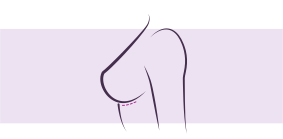
Inframammary Incision Approach:
The inframammary incision remains the most frequently used incision for Breast Augmentation and Breast Augmentation Revision surgery, especially with today’s increased popularity of silicone gel filled breast implants. The inframammary incision is placed along the inframammary fold or IMF (the crease under the breast). Dr. Mele likes to make the incision slightly above the IMF so that the scar will remain out of sight if your bikini top creeps up.
The inframammary incision is the preferred choice for most plastic surgeons. When the areolae are too small, or a larger incision is needed for silicone gel filled breast implants, the periareolar incision may not work. Another advantage of the IMF incision over the periareolar approach, the milk ducts along the lower pole of the nipple are preserved. (See Breast Augmentation and Breast Feeding below.) The IMF incision can also be reused to replace breast implants or to fix most breast implant complications with a much lower incidence of dimpling or flexion deformity.

Periareolar Incision Approach:
With the increased use of saline-filled breast implants in the 90’s and 00’s, the periareolar incision became very popular. Since saline breast implants can be inserted empty and then inflated with saline via a filling tube after they are inside, a smaller incision is required. A great place to hide this smaller incision is the junction of the areola and the lighter skin surrounding it. In this location, the resultant scar is well-hidden after it heals, and it is the least likely location for a scar to be seen in clothing. This periareolar incision also works well for women of color.
Problems can occur with the periareolar incision with dimpling and tethering to the pectoralis muscle causing indentation, which is increased during flexion. This is more likely when the periareolar incision is used more than once, or when the incision is use to remove breast implants without replacement. The periareolar incision is more difficult to use when a woman has small areolae, larger amounts of breast tissue and when silicone breast implants are desired. It is possible to make the scar too small because smaller incisions are associated with higher rates of breast implant rupture.
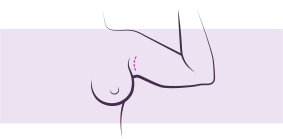
Axillary Incision Approach:
With this approach, implants are placed through an incision in the axilla (armpit). This location is discreet; however, because it is farther away from the breast, it can make placement of the implants more difficult. Since the lowest portion of the pocket cannot be touched through the axillary incision, there is a slightly higher risk of breast implant asymmetry. There is also more post-operative pain and a slightly higher risk of a change in nipple sensation with this approach. Additionally, the scar may be more visible in clothing.
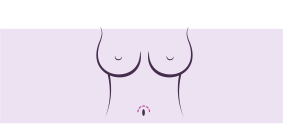
Umbilical Approach:
The transumbilical approach (TUBA) involves making an incision above the belly button and placing the implants through a long tube into position under the breast. Only saline breast implants may be inserted via this approach. The main advantage is no scar on the breast; however, since the scar on the breast usually heals very well, this is a minimal advantage at best. Moreover a bad scar at the umbilicus is harder to hide and harder to fix. Like the axillary incision, the umbilical incision is remote from the breast and there is less visualization and control of the operative site. Since the implant needs to be tunneled up to the breasts, this approach causes soreness in the upper abdomen that is not present with the traditional approach.
Where are the Breast Implants Placed?
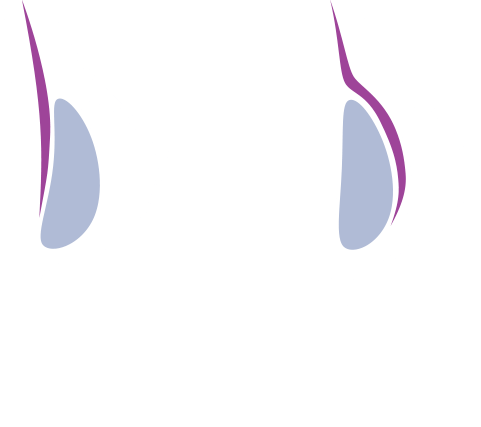
Most breast implants are placed behind the pectoralis major muscle. This provides several advantages:
- The muscle tapers the upper pole of the breast mound, allowing for a superior contour and a more natural teardrop shape. This works for round implants as well as for shaped implants.
- Placing the implant behind the muscle has historically decreased the risk of a tight scar around the implant, also called capsular contracture.
- If the breast implant is placed behind the muscle, there is improved visualization of the breast tissue during mammography.
- Decreased visibility and palpability of the implant.
Implants in front of the muscle have the following advantages:
- Better fill of the loose skin. Sometimes this can eliminate the need for a breast lift.
- Less movement of the implant with pectoralis major flexion.
What Type of Implants are Right for Me?
There are several options available for breast implants. The most frequently used breast implants in 2005 were smooth, round and saline filled. On November 17, 2006, the FDA lifted restrictions on the use of silicone gel breast implants. Since then the use of silicone gel filled breast implants has increased so that currently the use of saline breast implants and silicone breast implants is close to equal.
Smooth vs. Textured
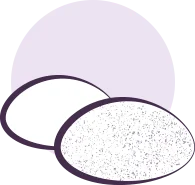
Implants were originally filled with silicone gel, and had a higher incidence of hardening. Texturing was introduced to help keep the implants soft. With improvements in the implant shells in the mid 1990’s the incidence of capsular contracture for silicone gel filled implants has decreased, approaching the rate seen with saline filled implants.
The most frequently used implants are smooth. They provide a softer, more mobile enhancement. Since smooth implants can rotate, only round implants are smooth. If placed behind the muscle, round breast implants still result in a tapered, teardrop shaped breast.
Currently, texturing is used primarily to keep shaped implants in their proper orientation. Textured implants are used most frequently in breast reconstruction after a mastectomy. In this case, the chest wall is flat and augmentation requires greater volume in the lower pole to achieve a more natural appearance. The texturing on the implant provides a rough surface that attaches to surrounding tissue like Velcro®. This keeps the bigger end under the lower pole of the breast and usually prevents the breast implant from rotating. Disadvantages of texturing include increased rippling (wrinkling of the implant seen through the skin), increased firmness, increased leakage (with Saline Breast Implants) and prolonged postoperative swelling. A rare association with textured breast implants is breast implant-associated anaplastic large cell lymphoma (BIA-ALCL). The association was the greatest with the most highly textured breast implants. This lead to Allergan® voluntarily withdrawing their BioCell® textured breast implants from the world market on July 24, 2019. The BioCell® texturing process was unique to Allergan®. It was the most aggressive texturing on the market, and was responsible for 90% of the known cases of BIA-ALCL at the time of the recall.

Round vs. Shaped
When the implant is placed behind the muscle, all implants provide a teardrop shape. Because texturing is required for a shaped implant, the disadvantages of shaped implants include increased rippling (wrinkling of the implant seen through the skin), increased firmness, increased leakage and prolonged postoperative swelling. Some patients can receive benefits from a shaped implant that outweighs these disadvantages, but this needs to be determined on an individual basis. Most patients have better results with smooth round implants when saline filled implants are used. For gel filled implants, highly cohesive silicone gel is used. These are soft, but have been nicknamed gummy bear breast implants, as their consistency is similar to fresh gummy bear candies. The greatest benefit may be the stability of its filling. The silicone gel inside form stable breast implants does not flow, so it will not migrate if the shell breaks. It has been suggested that texturing also provides additional stabilization of the breast implants, and it may decrease the risk of capsular contracture. Recent improvements in the shell of silicone gel filled breast implants, has significantly decreased capsular contracture rates, and this will likely dwarf any improvement seen from texturing.

Saline vs. Silicone filled
All implant shells are made of silicone. Silicone is an inert substance that is very well tolerated by the body. It is used for many types of implants, artificial joints and catheters that are permanently placed in the body. The difference between saline and silicone breast implants is the filler. Silicone filled breast implant restrictions were largely removed in 2006. As a clinical investigator for both US silicone breast implant adjunct studies, Dr. Mele has provided appropriately selected patients the option of silicone filled breast implants for the duration of his practice. Sponsored by Allergan (formerly Inamed & McGhan) and Mentor, these clinical trials have shown that silicone filled breast implants are safe and effective. Current recommendations and restrictions include:
1) While saline implants are available for women age 18 years and older, silicone gel implants are only available for women age 22 and over. 2) To detect “silent” leaks in the implant an MRI of the breast is recommended at three years after the initial surgery and every two years after that. 3) Recommendations may change as long term data continues to be collected. To facilitate the collection of longer term data a patient registry has been established. Additionally, patients currently enrolled in the original ten year silicone breast implant adjunct studies will continued to be followed for an additional five years. In 2007, new ten year studies started looking at outcomes for both Saline filled breast implants and Silicone Gel filled breast implants. Dr. Mele is a primary investigator for all these studies to help insure that Breast Augmentation Surgery remains safe and effective.
4) Because of concerns with damaging the implants, silicone filled implants should not be placed transaxillary, transumbilically or with the TUBA technique.
When considering whether to proceed with breast augmentation it is import to discuss the risks, benefits, procedure, alternatives and recovery with a Board Certified Plastic Surgeon certified by the American Board of Plastic Surgery. This is the only ABMS recognized Board dedicated exclusively to Plastic Surgery. Many of the risks associated with saline and silicone filled breast implants are similar; however, there are some differences between saline and silicone gel filled implants. Some of the problems specific to silicone gel filled breast implants are linked to leakage. The more liquid the filler, the more it will migrate should the tough outer shell fail. The “Gummy Bear,” form-stable breast implants are soft solids – more like Jello’ than a liquid. The upside is, they can’t leak, so MRI’s may not be required. For reconstructive patients (after mastectomy) the form-stable breast implants can be made into a larger variety of shapes. The downside is these soft solid silicone breast implants require a larger incision for placement. While this is not usually a problem for patients undergoing breast reconstruction or a breast lift with their breast augmentation, for a patient undergoing primary breast augmentation surgery, it means a larger incision.
Saline:
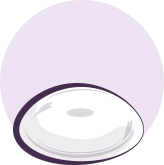
The main advantage of saline implants is that patients experience fewer problems if they leak. The implant will still need to be replaced, but the saline, which is nothing more than salt water, can be quickly and safely absorbed into the body. Capsular contracture is less likely with saline implants, though this advantage has been narrowing with the introduction of the newer silicone gel breast implants. Disadvantages include increased firmness to touch and increased rippling.

Silicone gel:
Advantages of silicone gel include a softer augmentation resulting in a more natural feel and a lower incidence of rippling. Disadvantages include increased difficulty detecting leaks and more problems following a leak, since silicone gel does not get absorbed by the body. If a gel implant is found to have a leak, it will need to be replaced. Form-stable silicone gel breast implants are more cohesive, and should not have the same problems with gel migration seen with the more liquid filled silicone gel breast implants. Contracture rates are higher with silicone gel implants, but there has been a decrease in capsular contracture associated with silicone gel implants in recent years, due to changes in the shell used to contain the gel.
Highly cohesive gel implants (Gummy Bears):
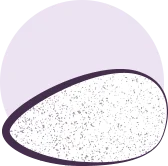
These are a specific type of silicone gel filled breast implant. Silicone is a very versatile substance and can be free-flowing like water, soft like a stress squeeze ball, or hard like rubber. The highly cohesive silicone gel Breast Implants are the latest generation of Breast Implants are now available in the US. The first company to receive FDA approval for highly cohesive silicone gel breast implants was Sientra in 2012. Sientra uses this form-stable silicone gel in all its Breast Implants (smooth round, textured round and shaped breast implants). Allergan’s 410’s were approved in 2013, and Mentor’s CPG’s were approved by the FDA later the same year. All breast implants have a silicone shell, even saline filled breast implants, but only the newest gummy-bear breast implants contain a high strength, highly cohesive gel that is both soft and solid. Soft enough to be squishable, but solid enough to be made into specific shapes. Referred to as “gummy-bear,” “form-stable,” or “shape-stable” breast implants, these implants provide additional advantages for women who desire breast reconstruction after mastectomy or for congenital breast abnormalities. Advantages include softness to the touch comparable to previous silicone gel breast implants, capsular contracture rates comparable to saline breast implants, reduced rippling, no leaking (they are solid) and the availability of various shape-stable dimensions. The main disadvantage is the need for a larger incision.
Gummy Bear Breast Implant Video
The gummy bear breast implant video below demonstrates how the cohesiveness of the gel allows it to remain intact, even when the breast implant shell is cut completely in half. The center does not flow like saline or regular silicone gel filled implants, making breast implant removal simpler in case the implant is damaged.
How Do I Know What Size is Right for Me?
Size is the most subjective part of breast augmentation. Results are most natural when breast augmentation is kept proportional with the rest of a patient’s frame. A specific result cannot be guaranteed, but some exercises will help to narrow the choices. No one method is ideal, but each can provide some benefit if used thoughtfully.
- Buy a bra the size you would like to be and fill it. You can use bra inserts, ziplock bags filled with rice, water balloons and even socks to try out different sizes. This can help identify the right size for you and let you try it out before making a final decision. If you bring this to your consultation appointment, it will help Dr. Mele understand your breast augmentation goals.
- Pictures of your desired result can help in choosing the correct size implant. The shape of the breast, however, may not be the same and sometimes a breast lift can be helpful. If you have a picture of a chest that is close to what you desire, bring it with you to your consultation. This can provide a starting point for discussion and can help convey your desires and establish realistic expectations.
- Before and after pictures can also be helpful. Dr. Mele keeps albums with before and after pictures in the consultation rooms to help narrow the range of choices and to demonstrate some common conditions that influence results. If you come across some before and after pictures you like, bring them with you so we can discuss them.
Tuberous or Tubular Breasts, Poland Syndrome and other Congenital
Sometimes the breast shape of the breast is influenced by a birth defect. Congenital Deformities cause a wide range of problems from severe to mild.
Poland’s Syndrome or Poland Syndrome
Poland’s Syndrome in its most severe form may present as the complete absence of the breast and nipple with webbing of the fingers (syndactyly). On the other hand, Poland syndrome can also present as mild asymmetry that is barely noticeable. The treatment of woman with Poland Syndrome will depend on how it presents. Severe forms may require staged surgery. This way, adjustments can be made to match the normal breast as it develops during puberty.
Tubular Breast or Tuberous Breast Deformities
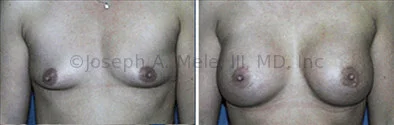
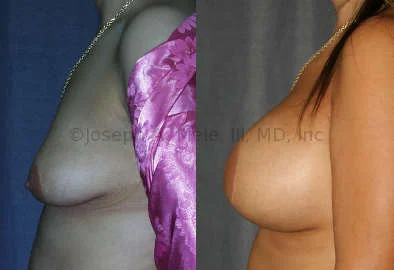
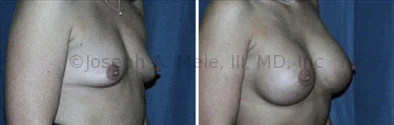
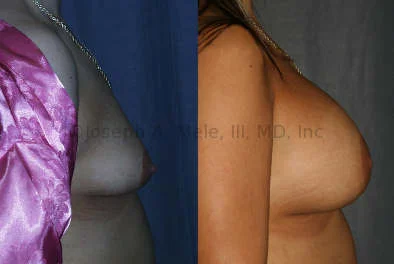
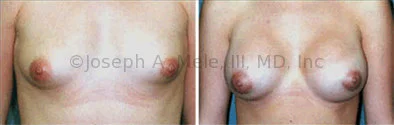
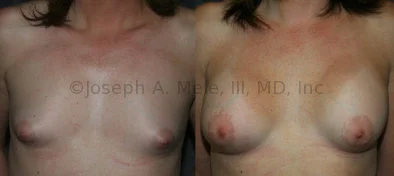
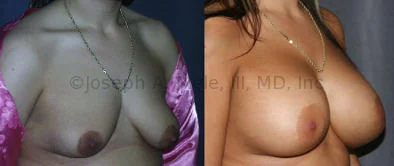
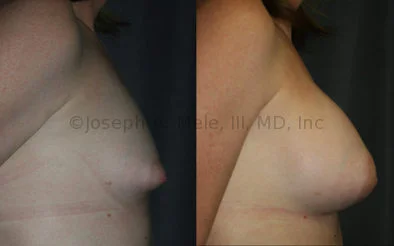
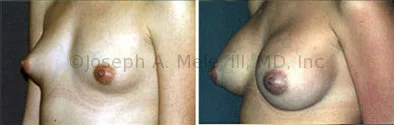
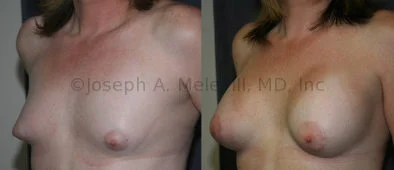
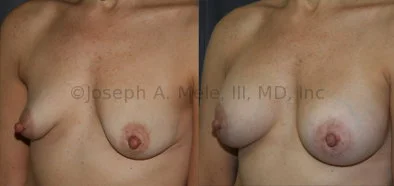
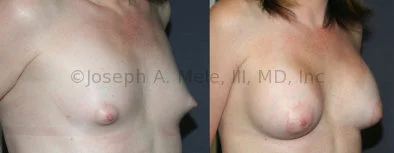
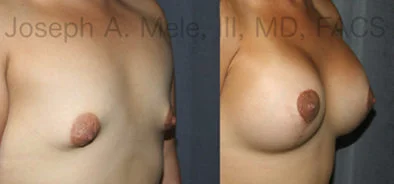
Tubular Breasts or Tuberous Breasts are another common congenital deformity. The tubular breast deformity is caused by tightening of the lower pole of the breast. It can also cause the breast tissue to herniate into the nipple/areola complex, resulting in “puffy nipples”. The overly full areolae project out from the breast mound into what is often called a “Snoopy Nose” deformity. These types of problems with breast shape can be helped with carefully planned surgery often including both Breast Augmentation and a Breast Lift.
Tubular Breast Augmentation Before and After Photos
Do My Breast Implants have a Warranty?


Mentor Breast Implants (Johnson & Johnson)

Sientra Breast Implants (Silimed)
Does Breast Augmentation Surgery Hurt?
The short answer is yes; however, there are ways to make the procedure more tolerable. RICE therapy can be helpful – RICE stands for Rest, Ice, Compression and Elevation. Some details of post operative care can be found on the Breast Augmentation Postoperative Instruction Sheet. Many patients find icing the breasts works as well or better than pain medication.
Pain medications can be helpful. Some medications such as aspirin, ibuprofen (Motrin®, Advil®), and Naproxen (Naprosyn®, Aleve®) will make you bleed and should be avoided. Acetaminophen (Tylenol®) is okay, but should be avoided while taking most prescription pain medications. Most prescription pain medications already have acetaminophen (Tylenol®) in them, and there is a possibility of overdosing and injuring your liver. Most herbal medications should be avoided the week before and after surgery, but Arnica Montana can help decrease swelling and pain after surgery. Information is available at the time of consultation.
Pain pumps can be helpful. These are medical devices that pump local anesthesia into the area around the implants. They decrease the pain by numbing the nerves that are irritated. A small catheter goes from the reservoir which regulates the flow of local anesthesia to the breast. Some pumps have a button that can be depressed to give a little extra medicine when it’s needed. Most pumps last several days, and will help get you over the most difficult part of recovery. Unfortunately, nation wide shortages, have made it occasionally difficult to find local anesthesia for elective use in pain pumps.
Most patients are moving well by the end of one week, and by two weeks, most postoperative restrictions are removed.
Bay Area Breast Augmentation surgeon Dr. Joseph Mele offers several approaches to Breast Enhancement. Periareolar (around the areola) and Inframammary (in the breast crease) incisions provide both discrete access and the best direct view of the breast implant pocket. This increases the predictability and the safety of your surgery.
Pre-filled silicone breast implants should only be inserted through the Periareolar or Inframammary incision to minimize trauma to the breast implant’s shell. Saline implants can also be inserted through these incisions or via Axillary (through the armpit) and Umbilical or ‘TUBA’ (through the belly button) incisions, because they are filled after placement.
Breast Augmentation and Breastfeeding
The two questions most frequently asked regarding Breast Augmentation and breast feeding are answered below:
Q: How long after breast feeding do I need to wait before having breast augmentation?
A: Most Board Certified Plastic Surgeons recommend waiting until no milk production is seen from the breasts for 3 to 6 months before having any breast surgery. Active lactation at the time of breast surgery can cause problems, such as milk accumulating around the breast implants or leaking through the incision. Both situations increase the risk of delayed wound healing and infection.
Q: Can I breast feed after having Breast Augmentation?
A: Yes. The current recommendation for women with breast implants who desire to breast feed is breast feed normally. Clinical evidence shows that the milk produced by women with breast implants is not tainted; however, the volume of milk produced may be decreased. If breastfeeding is very important to you, you may want to consider waiting until after having children to have your breast augmentation.
San Francisco Breast Enhancement Doctor
If you are looking to enhance the shape and/or size of your breasts through breast augmentation surgery (‘augmentation mammaplasty’), it is important to seek the expertise of a Board Certified Plastic Surgeon, such as Joseph A. Mele, MD, FACS. He is a San Francisco Breast Enhancement Doctor whose practice is based in the East Bay city of Walnut Creek, CA. Individuals who decide to undergo a breast augmentation/enhancement with Dr. Mele may anticipate a well cared for and comfortable experience.
Dr. Mele and his staff will do everything in their power to schedule convenient appointments, attentively listen to your desires, and fully address your cosmetic surgery concerns.
Dr. Mele will further discuss enhancement options with you during an initial consultation. During this time, you may also wish to inquire about other body contouring procedures such as Breast Lift surgery (‘mastopexy’) or Tummy Tuck surgery (“abdominoplasty”). Breast enhancement and belly enhancement procedures are often combined for a Mommy Makeover which is designed to help a woman regain her pre-pregnancy contours.
Contact Us
To see examples of Dr. Mele’s beautiful patient results, please view our Before and After Plastic Surgery Photos.
Board certified by the American Board of Surgery (ABS) and the American Board of Plastic Surgery (ABPS), Dr. Mele is a qualified Bay Area Breast Implants surgeon. He has published articles about cosmetic and reconstructive plastic surgery and has presented research at national, state, and local plastic surgery conferences. Dr. Mele is also an active member of the American Society of Plastic Surgeons (ASPS) and the American Society for Aesthetic Plastic Surgery (ASAPS).
If you are interested in breast implants, and would like to schedule a consultation, please contact Walnut Creek Plastic Surgeon, Dr. Mele by calling (925) 943-6353. You may also make a request by filling out a contact form.